


Our Technology
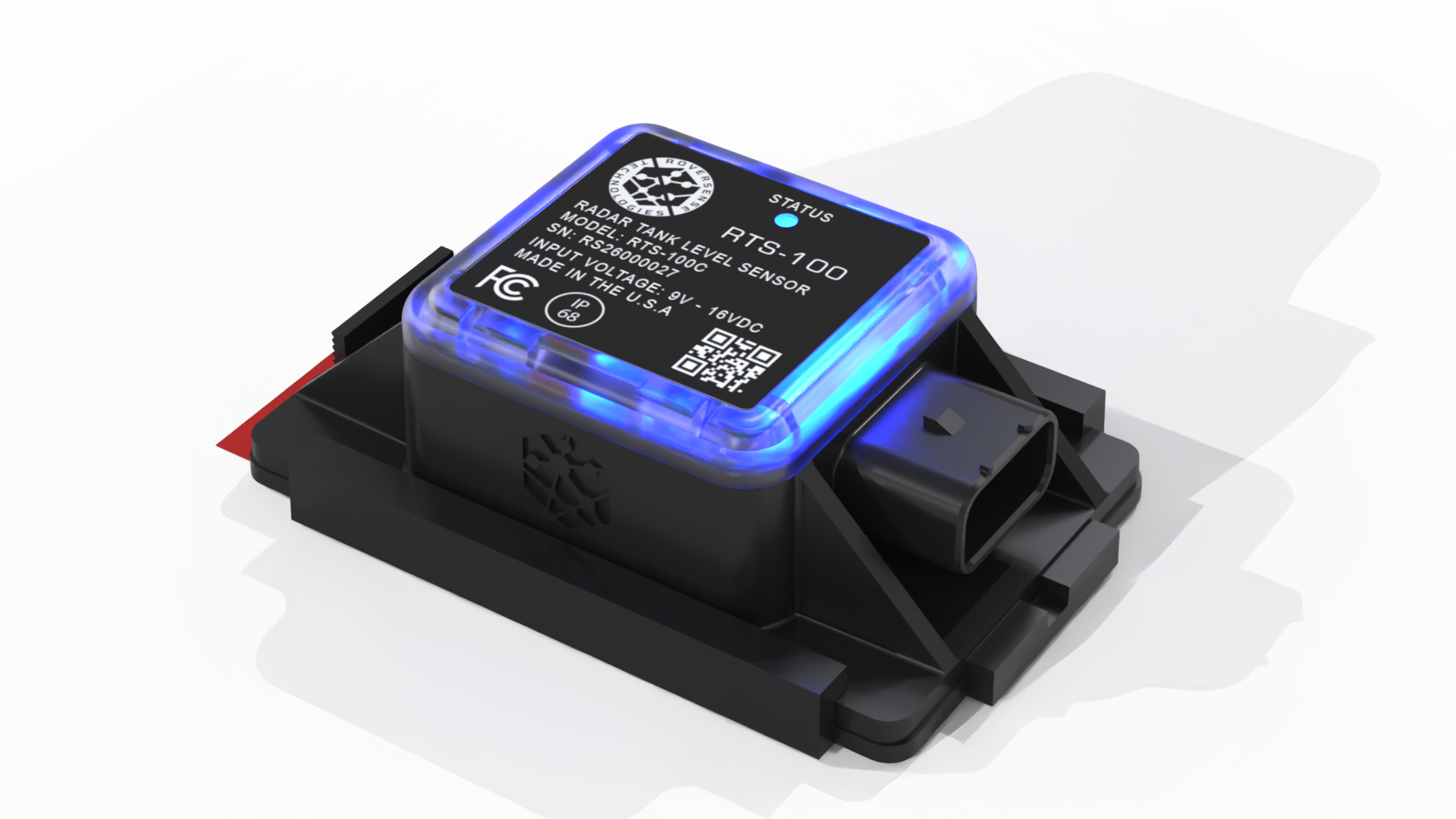
Radar Liquid Level Sensing
Advancements in semiconductor technology have enabled the rapid miniaturization of very large traditional electronic systems. As an example, radars now are packaged as modern single chip systems and are prolific throughout automotive and industrial applications. The smaller overall footprint and low cost has facilitated new and diverse implementations. One such implementation is the measurement of liquid levels in holding tanks of recreational vehicles (RVs).
Radar, short for “RAdio Detection And Ranging”, operates in the electromagnetic (EM) spectrum from 3 MHz to 300 GHz. Frequencies above 30 GHz are known as millimeter wave (mmWave) referring to the wavelength which is below 1 cm. As the radar operating frequency increases the size of the radar antennas shrinks to just a couple of millimeters enabling integration of an entire radar system into a tiny chip (Radar-on-Chip).
Our liquid level sensors integrate Radar-on-Chip technology. Similar to vehicle blind spot detection systems, we take full advantage of the mmWave frequencies (30 GHz to 80 GHz) to deliver incredible precision and resolution never before possible in near distance measurements.
How does it work?
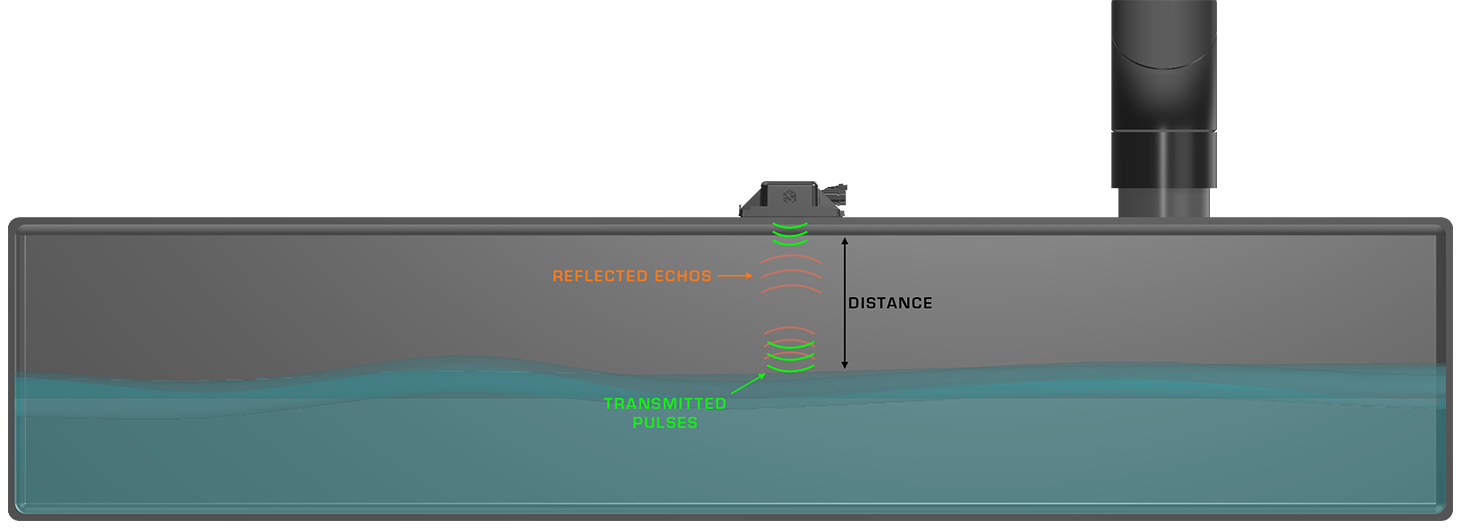
In simple terms, the radar is composed of a transmitter and receiver. A pulse is transmitted toward a target which reflects back an echo that is captured by the receiver. The two-way travel time and echo properties are analyzed by the radar to derive useful information such as distance to target, speed of target, direction of movement, etc
How is this useful for measuring liquid level?
A few interesting facts about EM waves and how they interact with various materials. Water is highly reflective to mmWave frequencies making it an excellent reflector. On the other hand, plastics can be quite transparent to mmWave frequencies making them invisible, thus the radar can see through the plastic holding tank.
Combining these two facts we can see that if we have liquid in a plastic container then we can use radar to measure the distance to the liquid surface (reflector) through the top of the container (plastic). The distance is used to calculate the height of the liquid in the container relative to the bottom of the tank, which is an indication of how full (or empty) the container is.
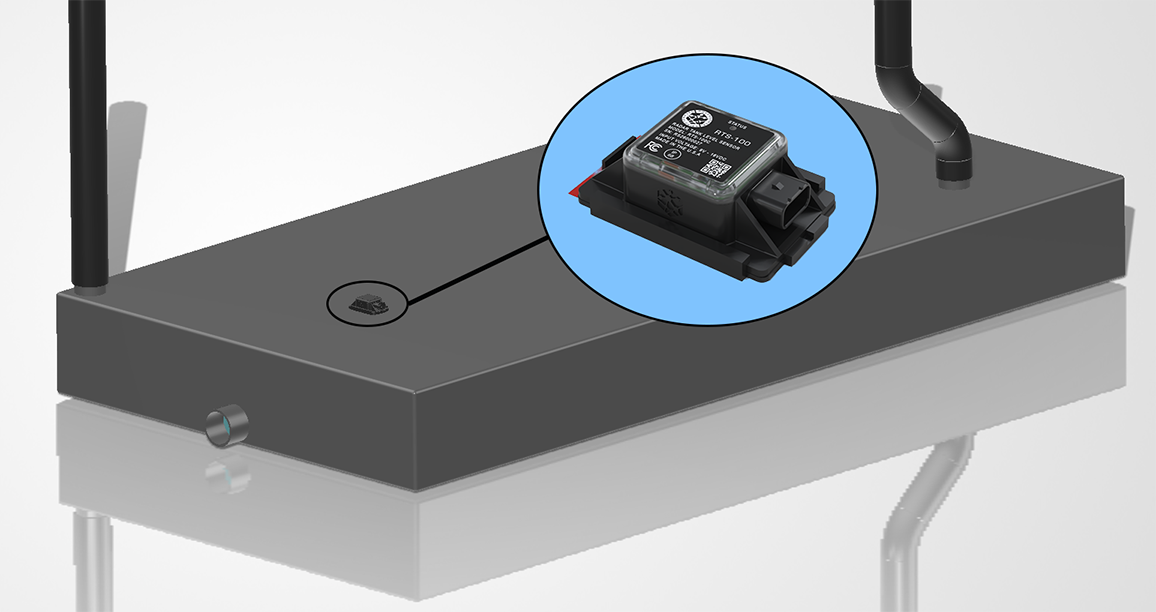
The Perfect Liquid Level Sensor for RVs
RVs pose several unique challenges for holding tank level measurements:
The holding tanks are typically shallow and have limited clearance around them,
The contents can be corrosive and biohazardous,
The holding tanks may accumulate interior build up due to normal use,
The contents of the tank may contain foam from soap and detergents.
Millimeter wave radar is ideal technology that addresses all of these challenges while providing superior accuracy. Its extremely high frequency operation uses very short wavelengths to measure shallow tanks, achieving resolutions below 5 mm. The small size of the sensors, enabled through modern miniaturization, allow radars to fit in tight compartments. Radar level sensing is a contactless measurement technique, meaning the radar sensor never directly encounters the substance being measured. Complex tank conditions such as build up, foam, sloshing, etc. are handled by the radar software, often requiring no user intervention.
RoverSense Tech’s Radar Level Sensors
Our Radar Tank Sensors (RTS-100) are designed specifically for RVs with features not available with other sensing solutions.
They are designed to fit in the small spaces between the holding tank and floor of the vehicle.
Our unique slide mounting system allows for installation or removal without any tools. The bracket includes a pre-attached adhesive for a true “peel and stick” installation.
The sensors incorporate software based control and data processing with remote re-programmability.
Out of the box RV-C support with options to integrate with existing multiplex vehicle buses.
Can be delivered pre-configured for high volume production line installation.
Ultra low power to ensure no impact on the vehicle battery.
Tested by certified environmental lab for Ingression Protection (IP68) and Electromagnetic Compliance (EMC CISPR 25 Class 5) to rigorous automotive standards.
Optimized design for high volume production throughput.
Engineering services available to customize sensor for your specific application.